Islamic Geometric Rosette Mandala: Timeless Symmetry for Modern Design
The Design Principle: Balance and Precision
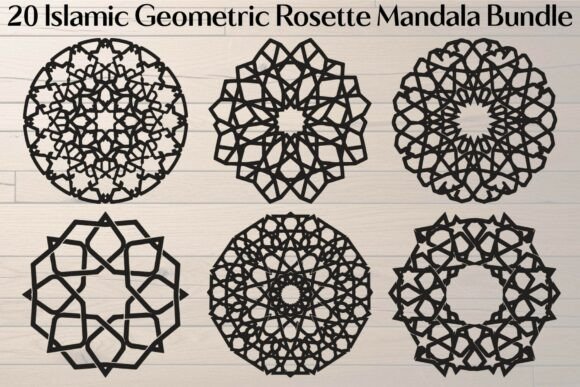
At its core, Islamic geometric art is built on principles of symmetry, repetition, and infinite tessellation. The rosette mandala, a circular composition of stars, polygons, and interlacing lines, embodies this pursuit of order and beauty. In a modern graphic design context, these patterns provide immediate visual hierarchy and a sense of stability. Their clean, vector-based lines ensure flawless scalability, allowing a single design to serve as a delicate social media icon or a grand architectural panel without losing clarity. This inherent flexibility makes them a cornerstone for professional presentation across digital and print media.
Practical Applications for Creative Professionals
The utility of a well-crafted geometric mandala extends far beyond traditional artwork. These assets are dynamic tools for solving contemporary design challenges. Consider integrating them into the following areas to enhance your projects:
- Brand Identity and Logo Design: A simplified rosette can form the basis of a distinctive logo or monogram, conveying values of precision, tradition, and elegance. It works exceptionally well for brands in wellness, luxury goods, architecture, and cultural sectors.
- Marketing and Social Media Graphics: Use the mandalas as background patterns, frame elements, or central motifs for eye-catching posts, story templates, and digital advertisements. Their complexity naturally draws the eye, improving engagement.
- Web and UI Design: Implement subtle, low-opacity versions as website backgrounds, section dividers, or loading animations to add texture without compromising readability. They can guide a user's journey through a digital interface.
- Editorial and Packaging Design: These patterns shine in print. Use them for book covers, magazine layouts, luxury packaging, and gift wrap. When employed in packaging design, they instantly communicate quality and craftsmanship.
- Merchandise and Product Design: From laser-cut wood panels and engraved metalwork to vinyl decals and textile prints, the clean vector paths are optimized for craft machines like Cricut and Silhouette, enabling small business creators to produce unique, high-value products.
Integrating Geometric Assets into Your Design Workflow
To maximize impact, selection and implementation require thoughtful consideration. First, assess the complexity of the mandala against your project's needs. A highly detailed rosette serves as a powerful focal point, while a simplified version may better support typography and text-heavy layouts. Always consider your color palette; these designs are often most striking in monochrome or a limited, harmonious palette that reflects the brand's core colors.
Ensure the asset aligns with your overall visual design goals. The geometric structure should complement, not compete with, other elements like photography or typography. When used correctly, it establishes a strong visual hierarchy, guiding the viewer's eye in a purposeful way. Furthermore, the vector format allows for endless customization—adjust line weights, alter colors, or combine elements from different mandalas within the bundle to create something truly original that fits seamlessly into your existing design system.
Elevating Communication Through Thoughtful Aesthetics
In a crowded visual landscape, the deliberate choice of design elements speaks volumes. Incorporating a meticulously designed Islamic Geometric Rosette Mandala demonstrates a commitment to quality, attention to detail, and an appreciation for timeless aesthetic principles. It moves a project from generic to distinctive, enhancing both its beauty and its communicative power. By selecting high-quality, versatile creative assets, you invest not just in decoration, but in the clarity, professionalism, and lasting impact of your visual message. This thoughtful approach to design is what ultimately resonates with audiences and builds enduring brand recognition.